I–IX
Mississippi Delta Blues · Infinity Scroll

The Clarksdale Series

From the crossroads to the crossroads. Nine scenes from the world that made American music.

9Scenes
88Years
4,000Miles
Influence
SCROLL
Nine Scenes
I
The Crossroads at Midnight
1938 · Greenwood, MS
II
The Juke Joint
1930s · Clarksdale, MS
III
The Last Morning
1943 · Stovall Plantation
IV
Sacred & Profane
1940s · Mississippi Delta
V
The Delta Goes Electric
1943–1950 · Chicago
VI
The Records That Crossed the Water
1962–1964 · London
VII
The Room Where It Didn't Matter
1967 · Muscle Shoals, AL
VIII
The King Goes Home
1970 · Indianola, MS
IX
The Crossroads Revisited
2026 · Clarksdale, MS
Part One

The Delta

The Mississippi Delta produced more music per square mile than anywhere in human history. Five frames from the world that started it all.

I
The Crossroads at Midnight
Scene One · 1938 · Dockery Plantation Road

The Crossroads at Midnight

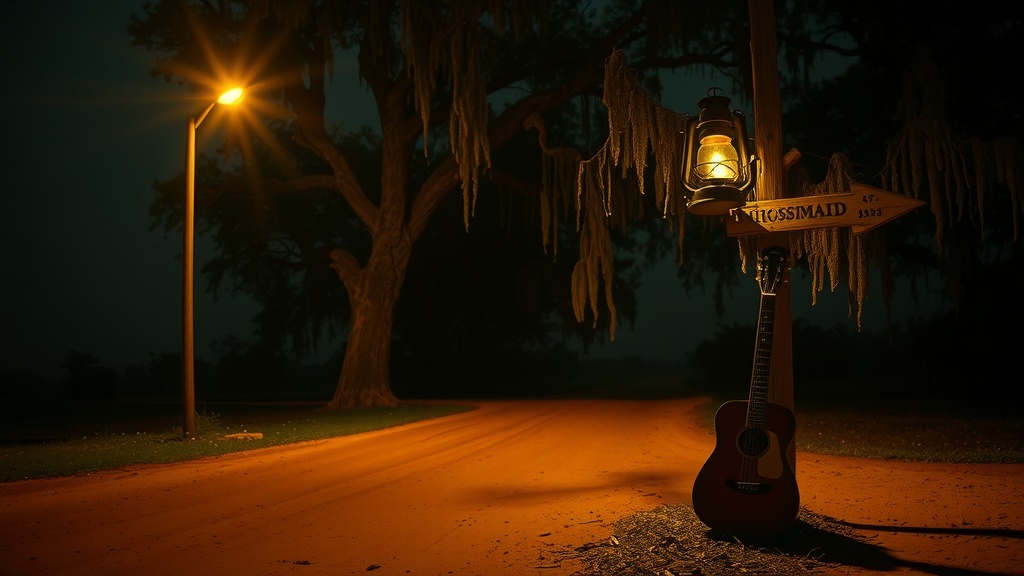
There is no historical evidence that anyone sold their soul at a Mississippi crossroads. There is overwhelming evidence that the legend was born there — in the gap between what people heard and what they could explain. A guitar playing things no one had taught. Notes falling like something remembered from another life.

"He went down to the crossroads at the midnight hour. Met a man in black clothes. Came back able to play like the sky had opened and handed him down something that shouldn't exist."
Midnight · August 1938 · Greenwood, Mississippi
II
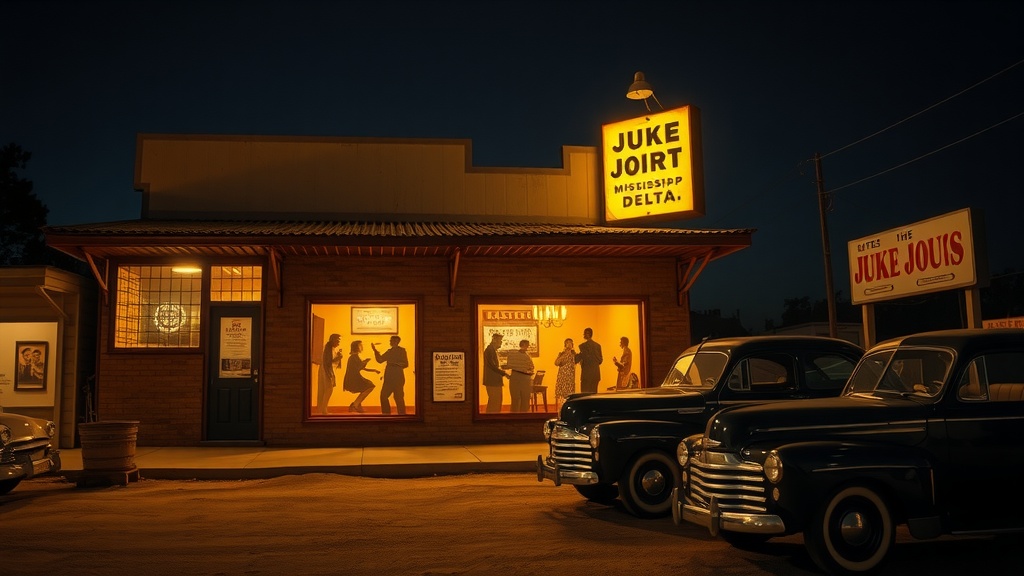
The Juke Joint
Scene Two · 1930s · Clarksdale, Mississippi

The Juke Joint

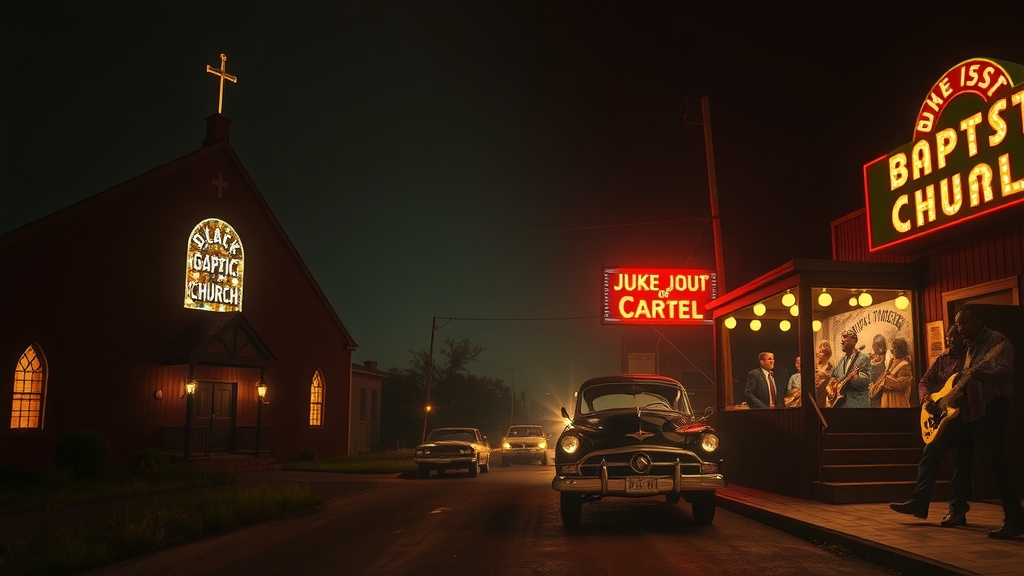
The juke joint was the one space that belonged entirely to the people who built the Delta. Six days a week of someone else's field. Saturday night was theirs. The music played until the sun came back up because everyone inside needed to feel something other than what the week had given them.

"The juke joint wasn't escapism. It was survival. The blues didn't help you forget your troubles. It helped you feel them fully enough to carry them another week."
Saturday Night · Ongoing · Sunflower County
III
Cotton Field at Dawn
Scene Three · 1943 · Stovall Plantation

The Last Morning

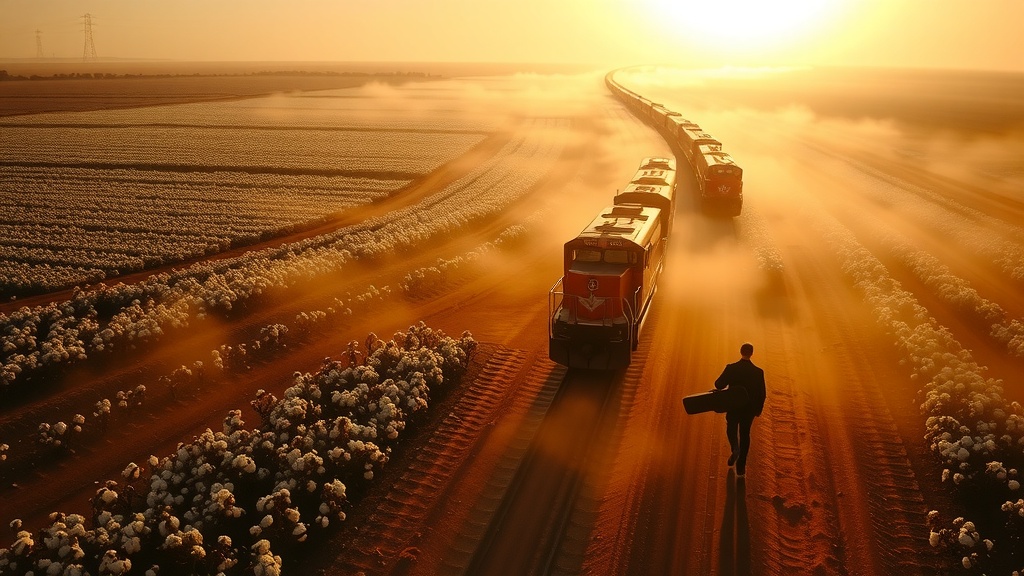
In 1941, Alan Lomax arrived at Stovall Plantation near Clarksdale with recording equipment and captured what the Delta blues actually sounded like in its natural habitat. Two years later, the man he recorded packed a guitar case and took the Illinois Central north to Chicago. He never worked a cotton field again.

"He walked out of that field carrying thirty years of Mississippi in a guitar case and headed north to plug it into an amplifier. What came out of the speaker was the twentieth century."
Dawn · Summer 1943 · Coahoma County
IV
The Church and The Juke Joint
Scene Four · 1940s · Mississippi Delta

Sacred & Profane

The church and the juke joint shared the same Saturday-night congregation. The same people who screamed hallelujah at the morning service were dancing at the juke joint that afternoon. The musicians who played both spaces understood something the theologians didn't: the sacred and the profane are the same emotional frequency. One just calls it God, and the other calls it the blues.

"She played gospel in churches on Sunday morning and blues in clubs on Saturday night, and she saw no contradiction because there was none. Both were about the same thing: a human being standing up and saying, I am here. I feel this. Listen."
Sunday Morning / Saturday Night · Same Soul · Mississippi
V
Maxwell Street Chicago
Scene Five · 1943–1950 · Maxwell Street, Chicago

The Delta Goes Electric

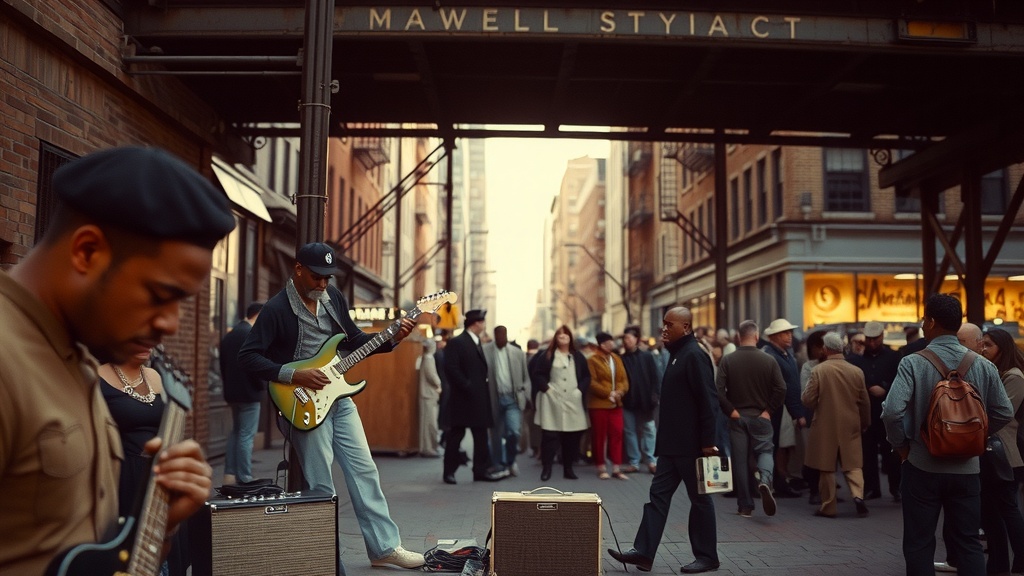
Maxwell Street was where the Great Migration landed its music. Hundreds of Delta musicians arrived in Chicago with acoustic guitars and discovered electricity. The sound that came out of those amplifiers on those street corners was something the world had never heard — Delta blues, amplified, urbanized, angrier and more joyful at the same time. The British kids who heard those records a decade later called it rock and roll.

"The notes that ripped from the speaker were still the Delta's — but now charged with the brute force of the city itself: raw, metallic, and hungry. The freight train in the distance was now an elevated train overhead. Same longing. Different machine."
1943–1954 · Maxwell Street · Chicago, Illinois
Part Two

The Circuit

The blues left the Delta. It crossed oceans, integrated studios, and came home changed. Four scenes from the journey back.

VI
Scene Six · 1962–1964 · London, England

The Records That Crossed the Water

They arrived as imports — scratched 45s in plain sleeves, passed hand to hand through a network of obsessives in London and Liverpool who treated them like scripture. Chess Records. Vee-Jay. Sun. Labels that meant nothing to the English suburbs but everything to the teenagers who heard what was inside them.

Mick Jagger named his band after a Muddy Waters song. Keith Richards learned guitar by slowing down Chuck Berry records — who had learned by speeding up Muddy Waters. Eric Clapton played Robert Johnson licks note-for-note in Soho clubs until his fingers bled, trying to close a gap of twenty years and four thousand miles with repetition alone.

The paradox was this: Black musicians who couldn't get booked at white venues in Memphis were worshipped as gods by white teenagers in Richmond. The Delta blues had to cross an ocean to be heard by the country that made it.

When the Rolling Stones arrived in Chicago in 1964 to record at Chess Studios — the same room where Muddy Waters and Howlin' Wolf had cut the records that changed their lives — Muddy Waters was painting the ceiling. The man whose music had launched a British cultural revolution was doing maintenance in the building where he'd made it.

The Stones asked him to put down the brush. He picked up a guitar instead.

"They didn't steal the blues. They heard it when America wasn't listening. The crime isn't that British kids played Black American music — it's that Black American musicians had to wait for British kids to play it before their own country would pay attention."
1962–1964 · Richmond, London, Chicago · The Circuit Completes
VII
Scene Seven · 1967 · Muscle Shoals, Alabama

The Room Where It Didn't Matter

Fame Studios sat on the banks of the Tennessee River in a town so small it didn't have a traffic light. Inside, something was happening that couldn't happen anywhere else in Alabama in 1967: Black artists and white musicians were making records together, and nobody in the room cared about anything except the groove.

Rick Hall built Fame because he was too stubborn to move to Nashville and too talented to be ignored. The Muscle Shoals Rhythm Section — four white kids from northwest Alabama who played with a feel so deep that Aretha Franklin's father assumed they were Black — became the most in-demand session band in American music. They played on everything. Percy Sledge's "When a Man Loves a Woman." Wilson Pickett's "Land of 1000 Dances." Aretha's "I Never Loved a Man."

When Pickett arrived from Detroit, he didn't want to record with white musicians. By the end of the first session, he didn't want to record with anyone else.

The secret wasn't technique. It was listening. Those musicians had grown up hearing the same AM radio stations as everyone else in the South — gospel on Sunday, country at noon, rhythm and blues after dark. They didn't cross genres because they didn't know the genres were supposed to be separate. The river had mixed it all together before anyone thought to build a wall.

Outside, the Freedom Riders were being beaten on Alabama highways. Inside Studio A, the integration had already happened — one take at a time.

"Nobody told them they were making history. They thought they were making a three-minute single. But every time a Black singer from Detroit locked into a groove with a white guitar player from Sheffield, Alabama, they were proving that the wall between American musics was a fiction. The music had always known what the country refused to admit."
1967 · 603 East Avalon Avenue · Muscle Shoals, Alabama
VIII
Scene Eight · 1970 · Indianola, Mississippi

The King Goes Home

Riley B. King left Indianola, Mississippi in 1946 with a guitar and $2.50. He hitchhiked to Memphis, played Beale Street for dimes, got a radio spot, and became B.B. King — the most famous blues guitarist alive. For twenty-four years he played every city in America, and a hundred cities that weren't.

In 1970, he went home.

Indianola hadn't changed much. The cotton fields still ran to the horizon. The roads were still unpaved past the edge of town. The white folks who had watched him pick cotton as a teenager now bought tickets to see him play. He performed at Club Ebony — the same juke joint where he'd played for five dollars a night before anyone knew his name.

But something had shifted. The kids in the audience weren't just there for the music. They were there because Eric Clapton had told them to be. Because the Rolling Stones had told them to be. Because the British Invasion had completed a circle that started in these fields and come back through London to land, finally, in the living rooms of white America.

B.B. King never expressed bitterness about this. He expressed gratitude — to the British musicians who sent American audiences back to the source. But the gratitude had a blade in it. It shouldn't have taken an ocean crossing for America to hear what was playing in its own backyard.

Lucille — his guitar, always named Lucille — sang the same notes in Indianola that she sang at the Fillmore. But in Indianola they meant something different. In Indianola, they meant I left, I became everything, and I'm still from here.
"The blues don't care where you play them. A bent note at Madison Square Garden and a bent note at Club Ebony vibrate at the same frequency. The difference is that at Club Ebony, the note knows your mama's name."
1970 · Club Ebony · Indianola, Mississippi · 30 Miles from Where It Started
IX
Scene Nine · 2026 · Clarksdale, Mississippi

The Crossroads Revisited

The crossroads isn't where it used to be. Highway 49 was rerouted in the 1970s, so the intersection where Robert Johnson allegedly made his deal now sits a quarter mile from the monument that marks it. Tourists park at the wrong spot, take photos of two metal guitars welded to a pole, and drive to Memphis for dinner. The real crossroads is behind a gas station.

Clarksdale has become a museum of itself. The old juke joints have plaques. Ground Zero Blues Club is co-owned by Morgan Freeman. The Riverside Hotel — where Bessie Smith died after a car accident on Highway 61 in 1937 — rents rooms to European blues pilgrims who want to sleep where suffering happened. The gift shop sells shot glasses.

But walk three blocks off the tourist strip and Clarksdale is still Clarksdale. Median household income: $22,000. Population shrinking every census. Young people leave the way they always have — north, to Memphis, to anywhere. The Delta produces culture the way it produces cotton: relentlessly, involuntarily, and mostly for the profit of people who live somewhere else.

The blues is alive here the way a language is alive in a village that the world has moved past. Not performed for tourists — although that happens too — but played on porches, in churches that double as community centers, in the back rooms of buildings that don't have signs. The difference between the blues as heritage and the blues as life is the difference between a museum and a kitchen. One you visit. The other you live in.

The question the Delta asks in 2026 is the same question it asked in 1926: Who profits from what this place creates? The answer hasn't changed enough.

"They built a museum at the crossroads. Put Robert Johnson's face on a postcard. Paved the road, hung a sign, sold the t-shirt. But the blues was never a place you could visit. It was a condition you lived in. You can't landmark a feeling. You can't put a plaque on grief. The tourists come looking for the crossroads and they're standing on it — they just can't feel it through their shoes."
2026 · Highway 61 & Highway 49 · Clarksdale, Mississippi · Where It Started, Where It Still Is